- A world-class marine security system
- Preservation and restoration of marine ecosystems
- Stronger partnerships with Aboriginal peoples and engagement of coastal communities
- More comprehensive data
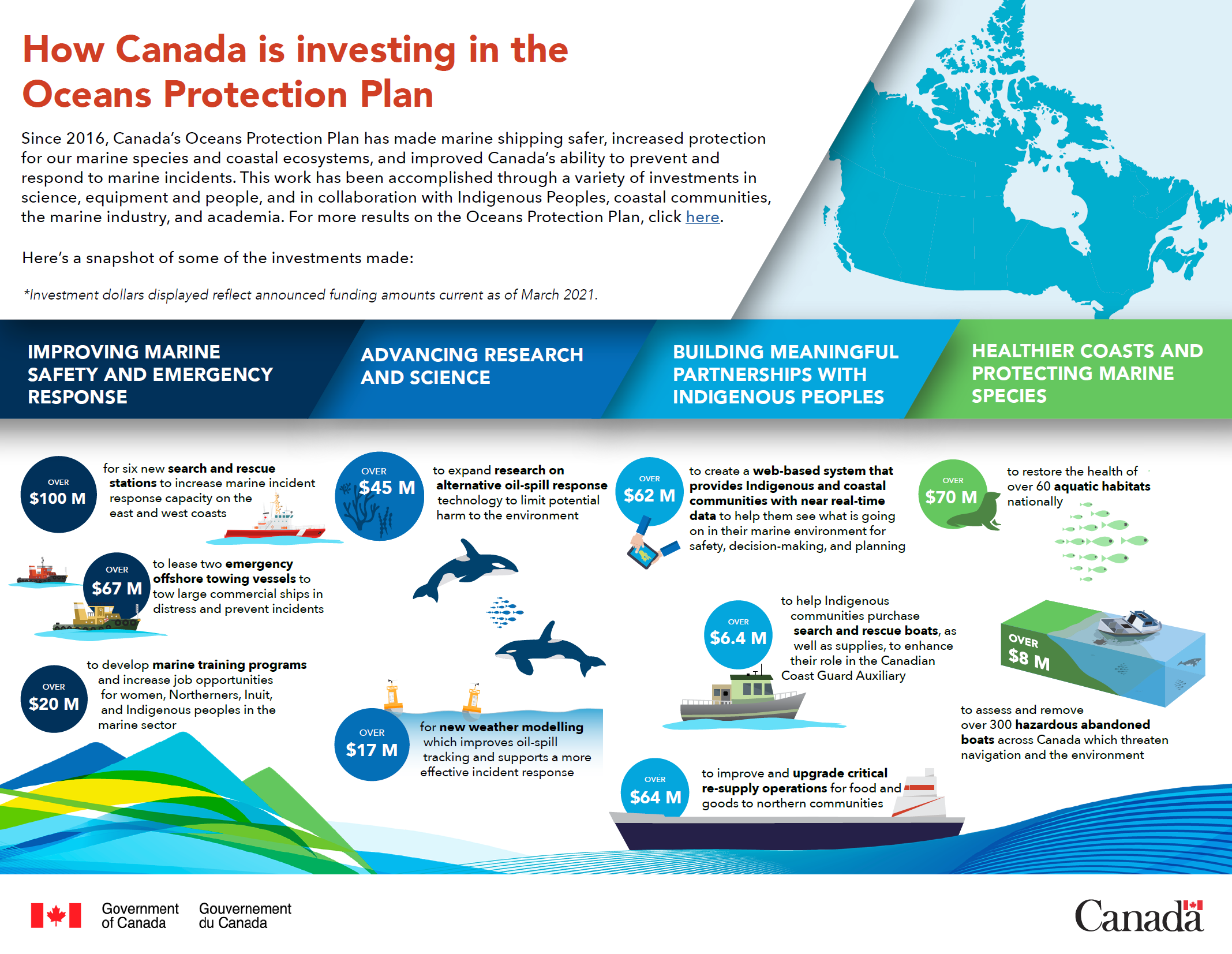 https://tc.canada.ca/en/initiatives/oceans-protection-plan/oceans-protection-plan-funding-graphic
For more information click here
This plan has indeed significantly improved marine safety across Canada. In recent years, 50 measures have been proposed to change the way things are done on Canada’s waterways, some already having been implemented. Many of our members at Transport Canada, Natural Resources and the Canadian Coast Guard have played an important role in the implementation of these measures.
In addition to this being National Aboriginal History Month, this plan works with Aboriginal communities to provide specialized training.
An online “Let’s Talk Transportation” platform has been developed to open a dialogue with all Canadian communities and to allow them to provide input. The “Let’s Talk Ocean Protection Plan” section has been launched to give you a voice. You can sign up to be part of it.
This plan includes another section, “Protecting Canada’s endangered whale populations”:
https://tc.canada.ca/en/initiatives/oceans-protection-plan/oceans-protection-plan-funding-graphic
For more information click here
This plan has indeed significantly improved marine safety across Canada. In recent years, 50 measures have been proposed to change the way things are done on Canada’s waterways, some already having been implemented. Many of our members at Transport Canada, Natural Resources and the Canadian Coast Guard have played an important role in the implementation of these measures.
In addition to this being National Aboriginal History Month, this plan works with Aboriginal communities to provide specialized training.
An online “Let’s Talk Transportation” platform has been developed to open a dialogue with all Canadian communities and to allow them to provide input. The “Let’s Talk Ocean Protection Plan” section has been launched to give you a voice. You can sign up to be part of it.
This plan includes another section, “Protecting Canada’s endangered whale populations”:
The $167.4 million Whale Protection Initiative aims to protect and support the recovery of Southern Resident killer whales, North Atlantic right whales and St. Lawrence-Estuary beluga whales through increased research and monitoring activities.[3]The Oceans Protection Plan is the largest investment ever made by the Government of Canada to protect Canada’s coasts and waterways[4]. It promotes Canadian economic growth. An interactive map has been put online to show Canadians what initiatives are underway. It will be refreshed monthly. In short, UCTE wants to take the time to highlight the importance of the work of its members who play a major role in keeping Canada’s coasts and waterways safe.
[1] https://www.un.org/en/observances/oceans-day [2] https://tc.canada.ca/en/initiatives/oceans-protection-plan [3] https://tc.canada.ca/en/initiatives/oceans-protection-plan/report-canadians-investing-our-coasts-through-oceans-protection-plan [4] https://letstalktransportation.ca/