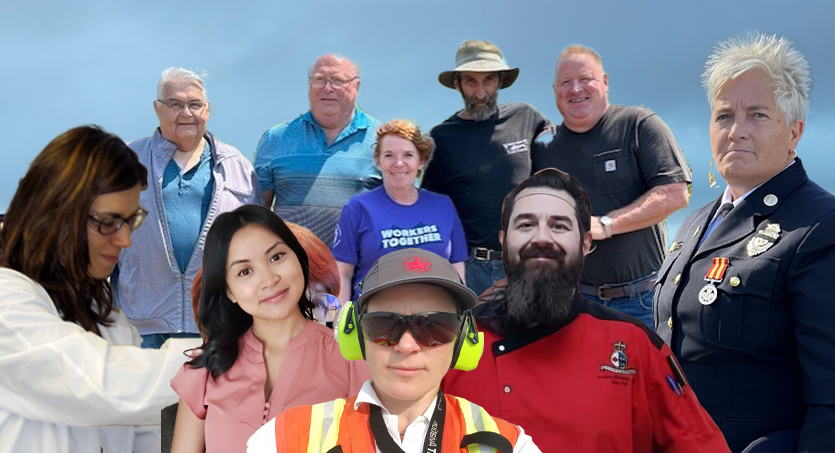

Edgar Almeida, President of Local 00047 in Sarnia, travels regularly to Hay River, NT to audit Safety Management Systems (SMS) for the Canadian Coast Guard (CCG).
Edgar’s work sheds light on the link between climate change and workplace hazards.
Changing Climate, Changing Working Conditions
To work in the Canadian North is to witness a great change in the world—and in the world of work—from up close.
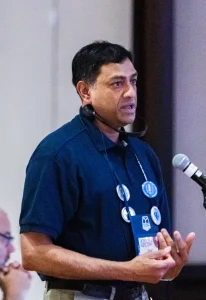
Edgar has been going up North for work since 2020. He’s seen big changes already in that time. The Arctic is warming between three and four times as fast as global mean temperatures. Permafrost is thawing, ecosystems are changing, and wildlife has to adapt. Sea ice covers a smaller area of the seas, over a shorter season. Seasons are changing in length, weather patterns are shifting, and wildlife breeding and hibernation patterns are disrupted. Therefore, hazards to our members change too.
Backcountry Work
The Canadian Coast Guard is active on the Mackenzie River with two vessels—the CCGS Dumit and the CCGS Eckaloo, covering a huge scope. From Hay River, NT—their home Port—to Tuktoyaktuk is 1500 km of river.
The Mackenzie freezes solid every year. When the ice breaks up each spring CCG crews put in the buoys and day markers and perform maintenance. Barges will rely on those aids to navigation to supply all the communities along the river with fuel, food, building supplies and, really, all their essential needs. These communities depend heavily on the river to remain connected. They also use it for transportation and recreation.
There are normally two periods each year when travel is cut off. When the Mackenzie is frozen solid enough in the winter, ice roads can cross it. In the summer, most of it is navigable. Minimizing those in-between periods depends on our members’ work.
There’s much to do because everything is exposed to the elements and the wildlife. Almeida says, “The spring ice break-up tears up shorelines, moves day marks and affects tower alignment. Things get broken, towers collapse, bears push them over. These aids to navigation then have to be re-aligned and re-installed.”
All the deckhands on the Dumit and Eckaloo are UCTE members. It’s very hard physical work in 12-hour shifts, 7 days a week straight for 5-and-a-half months.
The Aids to Navigation (ATON) program is divided into three phases: buoy deployment, daymark and tower work, and buoy removal.
As temperatures fall, before the river starts to freeze up, our members go back out to remove buoys and anchors and store them at caches along the river. Many of our seagoing crew members work on other CCG vessels after season end—or at different jobs for a change of pace.
‘Bulldogs,’ Bears, Bushfires
SMS auditing includes identifying hazards in the workplace as well as for the public. That ties it together with Edgar’s UCTE health and safety work.
When air quality is bad from wildfire smoke, Edgar says, “you could have the best N95 mask in the world, you’re still going to inhale particulates in the air because sweat impacts N95 masks.”
“And the bugs are another story. I’ve been out on the tundra in July and August, and they have an insect they call ‘bulldogs.’ So, you wear a net jacket all the way till your waist that you tighten up, and they still get underneath. They’re about the size of hornets, and they bite.”
Bears, also, are adapting. They’re breeding earlier and hibernating later because of the warming climate. Hornets, too, are breeding at different times – they weren’t a concern in the past for our deckhands, but there’s more exposure now.
The list of hazards in the backcountry sounds discouraging to say the least—but the work is crucial to supply lines into the communities.
Threatened Infrastructure
One step at a time, the infrastructure that supports Northern residents has to adapt. The very function of the river in territory life is threatened.
2022 saw historically high water levels on the river, while from 2023, there have been historically low levels—which have significantly affected river navigation. In 2024, the Eckaloo and Dumit were redeployed while parts of the river were not accessible to navigation due to drought. There is now even discussion of a permanent road project—a plan B for times when the Mackenzie is not navigable.
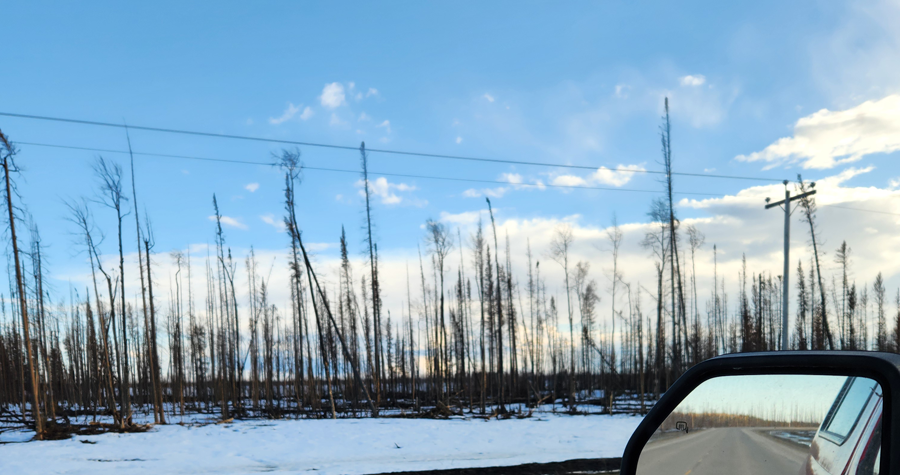
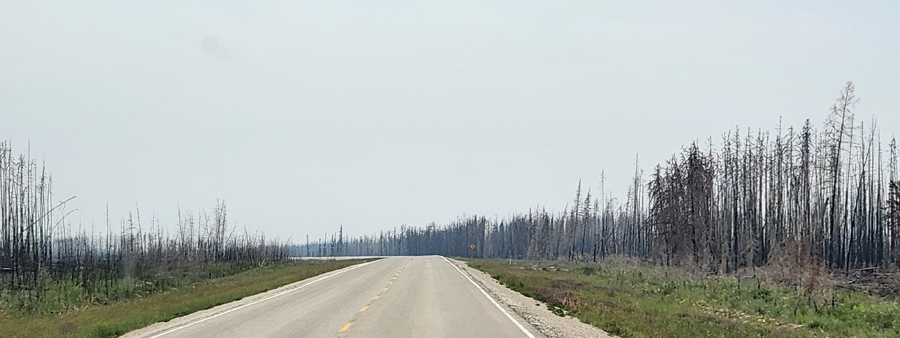
Hay River was completely evacuated three times just in 2022 and 2023. There’s only one highway out to Yellowknife, and Almeida was told it was like driving “through the gates of hell.” Parts of cars were melting; the fire was right up to the road—some vehicles caught fire on the way. There are also ‘zombie’ fires—fuelled by vegetable matter underground—that have been burning since 2023.
As permafrost thaws, building foundations are destabilized and ATON towers (used for day marks, shore lights, radar beacons and other navigational components) are undermined too. The changes are piling up and complicating each other.
Life and work in the North are being transformed by climate change in ways that should make us all take notice. For our members, climate change is not just an environmental issue; it is a workplace health and safety issue. Members in the Northwest Territories are seeing it first and fastest, but the lessons Edgar is learning about workplace safety, infrastructure resilience, and adaptation will increasingly matter all across Canada.